

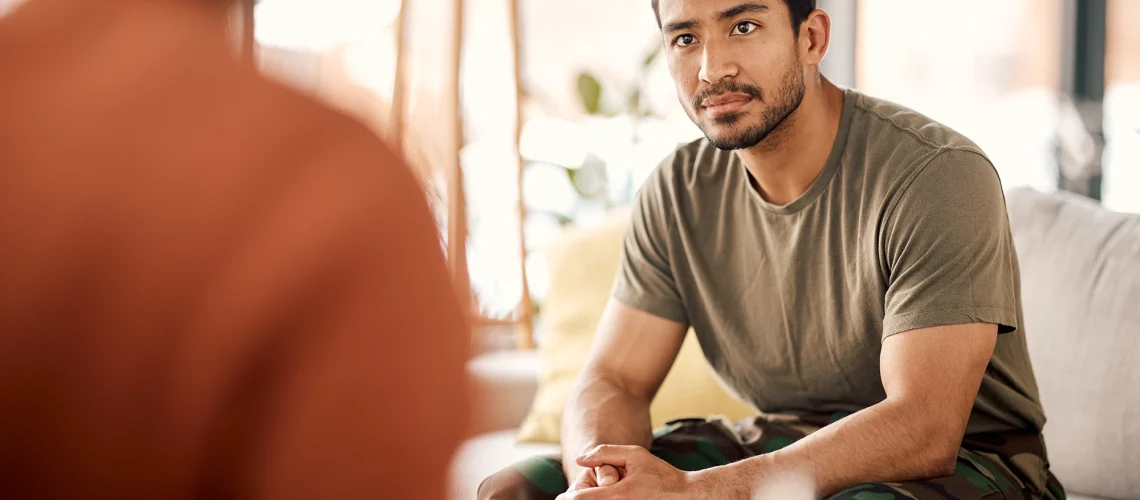
A Marine comes home from his third deployment and finds the quiet unbearable.
No orders, no mission, no one checking that he’s still standing at 0500.
He starts drinking to fall asleep. Then two. Within a year, the drink isn’t helping him sleep anymore; it’s the only thing keeping the nightmares at a distance at all.
That’s not a rare story. It’s one of the most common paths we see veterans walk into addiction treatment for.
Why Veterans Face a Different Kind of Risk
Combat trauma, chronic pain from service injuries, and the jolt of leaving a highly structured military life all stack the odds against veterans in ways civilian addiction treatment often isn’t built to address.
According to the Department of Veterans Affairs, more than one in five veterans with PTSD also has a co-occurring substance use disorder, and roughly a third of veterans seeking treatment for substance use also carry a PTSD diagnosis. Alcohol and opioids show up most often: alcohol as a way to numb hypervigilance and sleep problems, opioids after a service injury that turned into long-term pain management nobody planned for.
Then there’s the adjustment itself. Military life runs on structure, rank, and purpose. Civilian life often runs on none of that, and the isolation that follows can be a trigger in itself.
What Treatment Actually Looks Like Here
We built our veteran-focused program around one idea: a veteran’s addiction rarely shows up alone. It’s usually tangled up with trauma, physical pain, or the identity loss that comes with leaving the service, and treating the substance use without touching those roots tends not to hold.
Medical detox comes first when it’s needed. Withdrawal, especially from opioids prescribed for a service-related injury, gets managed under medical supervision so it’s safe and as comfortable as possible.
Trauma-informed therapy addresses the root, not just the symptom. Our therapists use cognitive behavioral therapy, EMDR, and mindfulness-based approaches specifically because these are the methods with the strongest track record for treating trauma alongside substance use, not instead of it.
Peer support groups connect veterans with people who actually get it. Veterans share a specific kind of understanding that doesn’t translate easily to a mixed civilian group, and we build that into the program rather than treating it as optional.
Family therapy brings loved ones into the process. Addiction doesn’t happen in isolation, and neither does recovery. Spouses, parents, and kids often need their own support and education to help a veteran stay steady after treatment ends.
Holistic care rounds out the clinical work. Yoga, meditation, nutritional support, and creative therapies like art and music give veterans tools for managing stress that don’t rely on a prescription pad, working alongside the clinical treatment rather than replacing it.
Aftercare: The Part That Actually Determines Whether It Sticks
Treatment doesn’t end when someone walks out the door, and for veterans especially, what happens in the following months often matters more than the program itself. We help set up sober living arrangements when needed, connect veterans with local peer support groups, and keep therapy sessions going through our aftercare program.
The goal isn’t just getting through detox. It’s building a life afterward that doesn’t need the substance to function.
Frequently Asked Questions
Does Spring Gardens Recovery accept VA benefits or TRICARE?
Coverage varies by plan and situation, so the best way to confirm is to call and verify benefits directly with our team before starting treatment.
Is EMDR effective for veterans specifically?
Yes. EMDR is widely used in VA and military treatment settings and has strong research support for treating combat-related PTSD, which is part of why we use it alongside other trauma-focused therapies.
Can a veteran get treatment for chronic pain and addiction at the same time?
Yes, and this is actually one of the more common situations we see. Treatment plans are built to address pain management and substance use together rather than one at a time.
What if a veteran isn’t ready to talk about their combat experience yet?
That’s normal, and nothing about treatment requires forcing that conversation before someone’s ready. Trauma-informed therapy is paced around what the person can actually handle, not a fixed script.
Reaching Out Is the Hard Part
Asking for help can feel like its own kind of surrender, especially for someone trained to push through. It isn’t. It’s usually the first genuinely strategic move toward getting your life back.
If you or a veteran you love is dealing with addiction, contact Spring Gardens Recovery or call 352-480-0669 to talk through what treatment could look like.